The Cost of Dying in the UK in 2026: Burials vs Cremations
The cost of dying in the UK continues to rise, and in 2026 many families face difficult financial decisions at an already emotional time. Funeral expenses now represent one of the largest unexpected costs households encounter, often arriving with little opportunity for preparation.
This article explains the true cost of dying in the UK in 2026, compares burials, traditional cremations and direct cremations, and explores why more families are choosing simpler options.
Try our simple cremation service cost calculator here.
The rising cost of dying in the UK
Over the past decade, funeral costs have increased faster than inflation. Although some prices have stabilised slightly in recent years, the overall trend remains upward. Several factors drive this rise, including higher crematorium and burial fees, energy costs, transport expenses and staffing pressures.
As a result, families increasingly seek transparency, flexibility and value when arranging a funeral.
According to industry reporting, 2025 marked another record year for funeral expenses, setting the baseline for costs now seen in 2026.
(Source: Today’s Wills & Probate )
Average funeral costs in the UK in 2026
Traditional burial costs
Burial remains the most expensive funeral option in the UK. While costs vary significantly by location, a full burial typically includes:
- Funeral director fees
- Burial plot purchase
- Interment (grave opening) fees
- Coffin
- Hearse and staff
- Minister or celebrant fees
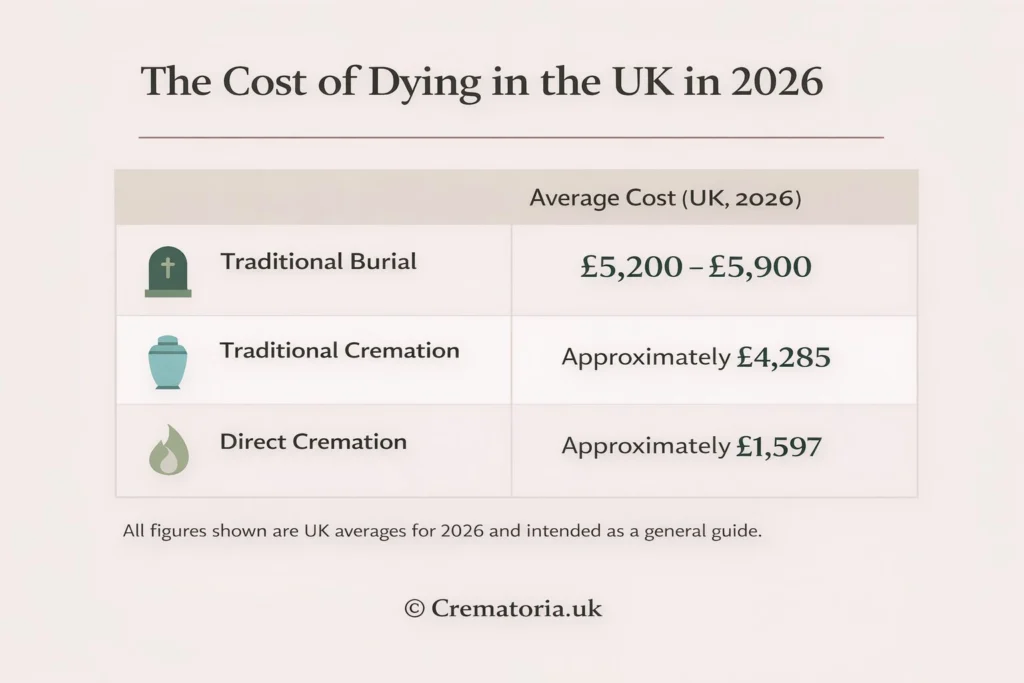
Average cost of a traditional burial in the UK (2026):
£5,200 – £5,900
In London and parts of the South East, burial costs can exceed £7,000, mainly due to limited burial space and high plot prices. By contrast, some rural areas remain more affordable, although availability continues to shrink.
Traditional cremation costs (full service)
A full service cremation includes a ceremony at the crematorium with mourners present. It usually involves:
- Funeral director services
- Crematorium fee
- Coffin
- Hearse and staff
- Celebrant or minister
- Music and service arrangements
Average cost of a full service cremation in the UK (2026):
Approximately £4,285
However, regional differences remain significant:
- London: around £5,449
- Northern Ireland: approximately £3,441
These differences reflect crematorium fees, staffing costs and local authority pricing.
Direct cremation costs
Direct cremation has become the fastest-growing funeral option in the UK. It involves cremation without a funeral service at the crematorium and without mourners present. Families may choose to hold a separate memorial later.
Average cost of direct cremation in the UK (2026):
Approximately £1,597
In many cases, direct cremation costs less than one-third of a traditional burial and less than half the price of a full service cremation.
(Source: Best Direct Cremation – trends and pricing)
Why direct cremation continues to grow
Direct cremation now accounts for a significant and growing proportion of UK funerals. Several factors explain this shift:
Cost transparency
Firstly, direct cremation pricing is clear and predictable. Families know exactly what they are paying for, without unexpected add-ons.
Changing attitudes
Secondly, many people prefer simplicity. Large formal funerals no longer suit everyone, especially when the deceased expressed a wish for “no fuss”.
Flexibility for families
Additionally, families can organise a memorial, wake or celebration of life at a time and place that suits them, rather than feeling rushed.
Geographic challenges
Furthermore, families often live far apart. Direct cremation allows time for travel and planning without pressure.
Burial vs cremation vs direct cremation: a clear comparison
Cost comparison (UK averages, 2026)
- Burial: £5,200 – £5,900
- Traditional cremation: ~£4,285
- Direct cremation: ~£1,597
Emotional and practical considerations
While cost matters, emotional needs remain important. Traditional funerals provide shared rituals and structure, which many families value. However, separate memorials can offer similar emotional benefits when planned thoughtfully.
Therefore, the “right” choice depends on values, wishes and circumstances, not cost alone.
Additional costs families often overlook
Even with careful planning, families may face extra expenses, such as:
- Flowers
- Order of service printing
- Catering for wakes
- Memorials or headstones
- Ashes interment or scattering fees
Consequently, total costs can rise beyond headline figures unless families plan carefully.
How families can manage funeral costs in 2026
To reduce financial strain, many families now:
- Compare funeral director pricing carefully
- Consider direct cremation with a later memorial
- Use prepaid funeral plans and review terms
- Seek transparent, itemised quotes
Importantly, understanding options early helps families make informed decisions rather than rushed ones.
Frequently Asked Questions (FAQ)
The average cost varies by type. A burial typically costs £5,200–£5,900, a full service cremation around £4,285, and a direct cremation approximately £1,597.
Yes. Direct cremation is the fastest-growing funeral option in the UK, driven by lower costs, simplicity and greater flexibility for families.
Burials require land, grave preparation and long-term maintenance. In many areas, burial plots are scarce, which increases costs significantly.
Yes. Many families hold a memorial service, celebration of life or private gathering days or weeks after the cremation.
Yes. London remains the most expensive region, while Northern Ireland and some northern regions are typically more affordable.