
What Is a Catafalque? A Complete Guide
What Is a Catafalque? A Clear and Helpful Guide for Families
If you have attended a funeral or cremation service in the UK, you might have noticed a raised platform holding the coffin at the front of the chapel. This structure is called a catafalque.
Although the name sounds unusual, the concept is straightforward. A catafalque plays an important part in many funeral traditions, offering both practical support and symbolic meaning.
This guide explains what it is, why it’s used and what families can expect when they see one at a crematorium or place of worship.
What Exactly Is a Catafalque?
A Practical Definition
It is a raised stand or platform used to support a coffin during a funeral or cremation service. In most UK crematoria, it sits at the front of the chapel and becomes the central focal point for the ceremony.
While modern versions are simple in design, the purpose remains the same: to hold the coffin securely and respectfully.
A Structure with Centuries of History
Although we associate catafalques with modern funeral practices, they have existed for hundreds of years. In medieval Europe, elaborate catafalques were often constructed for royalty, clergy or public figures.
Today, the designs are far more modest, but the symbolism of honour and respect remains.
What Does a Catafalque Look Like in UK Crematoria?
Modern, Safe and Unobtrusive
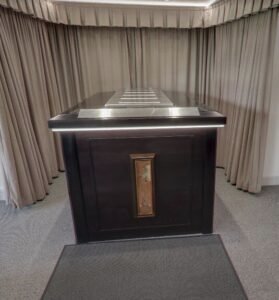
Most UK crematoria use sturdy, discreet catafalques designed to blend into the chapel setting. These structures are usually made from wood, metal or a combination of both.
They are strong, stable and designed to support the weight of a coffin safely throughout the service.
In a crematorium the catafalque usually have an arrangement of rollers on the top. This allows the coffin to be slid onto the structure without much resistance.
Fixed or Movable Designs
Depending on the crematorium, the catafalque may be either:
- Fixed, meaning it remains in place permanently
- Movable, allowing the chapel to be arranged differently for various services
Movable catafalques often sit on discreet wheels, especially in crematoria that host back-to-back services throughout the day.
The Purpose and Role of a Catafalque
Creating a Focal Point for the Service
A funeral or cremation service typically centres around the coffin, which represents the life being honoured.
The catafalque provides a respectful platform that lifts the coffin slightly, making it visible to everyone and ensuring that floral tributes or decorations can be placed nearby.
Supporting the Committal Moment
The catafalque often plays a role in the committal — the point near the end of the service where the coffin is entrusted to its final place of rest. Depending on the crematorium, this may involve:
- Curtains closing
- The coffin lowering
- The coffin gliding gently out of sight
Each crematorium uses its own system, but the catafalque is almost always part of this final stage.
Personalisation and Decoration
Some families choose to personalise the area around the catafalque. This may include flowers, photographs, candles (where allowed) or small personal items. However, every crematorium has its own rules, so it’s always best to check in advance.
FAQs About Catafalques
Do all crematoria use a catafalque?
Yes. It is a standard feature in nearly all UK crematoria and funeral chapels.
Can families touch or approach the catafalque?
Usually yes, especially if they wish to lay flowers or say a private farewell before the service begins.
Is the catafalque visible after the committal?
It depends on the chapel layout. In many crematoria, the catafalque is visible throughout the service, even at the end. Some families ask for the curtains to be closed after the service and this will then prevent the coffin and catafalque from being seen.